
June is Foster a Pet Month, and to the average person, that means nothing. To me, it’s a gentle reminder that my home has more space, I have more time, and I can provide a jump start in life to a cat in need.
In 2025, my cats took their journey to health and happiness over the rainbow. Simba, aka Bubby, passed on March 4, 2025, and Mittens, my very first cat, passed just before Thanksgiving in 2025. I was determined to remain a cat-free home, leaving just myself and my partner with our two small rescue dogs, Pickles and Bo, in our 500 sqft apartment in Astoria, Queens.
After Bubby passed, we fostered bottle babies who quickly found homes through social media posts I collaborated on with Weruva and PuppyKittyNYC. I thought maybe we'd foster again someday... if the feeling was right.
Then came what felt like the blizzard of the century. New York City was buried under frozen, exhaust and urine-stained snowbanks. Shelter intake numbers skyrocketed. Pop-up crates appeared everywhere. Street cats came in with burned paws from road salt, and kitten season had become year-round. Except these kittens were alone, abandoned by their mothers who needed shelter and warmth to produce the milk their babies needed to survive.
I volunteer every Tuesday at PuppyKittyNYC. Lil Paulie arrived around Christmas and hissed, swatted, and screamed in terror whenever anyone cleaned her cage. She immediately flung litter out of her box and wanted absolutely nothing to do with humans.
She was older than the bottle babies, and I didn’t feel like I had enough room in our apartment, nor enough heart after losing my cats.
How could I even think about bringing in a cat who needed so much work, time, and space?
More Space Than You Think
The Shelter Reality
The reality of a shelter environment is shocking if you’re not familiar. “Angel” by Sarah McLachlan doesn’t play when you walk in. You’re hit with the smell of urine, disinfectant, and sickness, and met by exhausted volunteers trying their best to care for every animal in the building.

At PuppyKittyNYC alone, there are over 150 cats of varying ages, temperaments, and adoptability. That doesn't include cats at veterinary appointments, kittens in foster care, or founder Meagan's garage, which transforms into a kitten nursery every spring.
Many of these cats spend days, months, or even years in cages as small as 4’ x 2’ (8 sqft), despite the best efforts of volunteers, staff, and rescue leadership.
Volunteers do what they can, balancing jobs, retirement, school, and life. But with 150+ cats in care, there simply aren’t enough hours in the day for every cat to get the socialization they need.
Kittens often struggle the most, especially single kittens who miss critical developmental opportunities and can become fearful or develop what many rescuers call "single kitten syndrome,” which Lil Paulie definitely has. Every week I came in, she was still angry, still terrified, and still throwing litter everywhere.
A Mansion In Queens
Watching her struggle was heartbreaking. Then a message came through the shelter group chat: "We need everyone to step up and foster. We're turning away intakes because we don't have room."
I looked around our apartment. Our bathroom was roughly 36 sqft, 350% larger than her cage. I work from home. I have foster experience. I had to step up.
She started in the bathroom with everything she needed. Over time, she gained access to our entire 500-square-foot apartment. It must’ve been a mansion to her.
Four months later, that space has helped her gain confidence and discover that life doesn't have to be spent defending a tiny cage.
Offering What a Shelter Can’t
Our home provides Lil Paulie many things, but consistency is key when it comes to fostering any animal.
- Same people
- Same feeding schedule
- Same sounds every day (Love is Blind marathons…)
The Bathroom Bootcamp

Luckily, fostering a cat of any age gives you time to cat-proof your house. Lil Paulie needed to start in a small room that kept her safe and contained. The first 2-3 weeks exclusively in the bathroom, equipped with:
- Hiding Places
- Blankets
- Litter Box
- Toys
- Scratcher
- Feliway Diffuser
- Camera for monitoring
We visited consistently for cleaning, feeding, treats, and scrolling TikTok together.
The Unexpected Bonding Experience
What I did forget about was this being our only bathroom. Both my husband and I work from home, Lil Paulie had no choice but to witness normal human life.
- Brushing teeth together
- Showering together
- “Pooping together”
- Learning humans aren’t actually that exciting
The Foster Plan: Turning a Feral Kitten Into a House Cat

My partner and I have consistent schedules, meetings with nonprofits over Zoom, and the constant editing of memes for social media. We had to make rules and a plan, and stick with it.
Phase 1: Decompression (Weeks 1-2)
People talk about the "honeymoon phase" with puppies. Cats don't really do that, especially terrified cats. The goal during decompression is to give them space.
- Distance - We left her alone, even though she looked curious or “happy.”
- Routine - We left her alone, even when we were feeding, cleaning, and moving around her new space.
- No Pressure - We left her alone, even when she was approaching me, taking treats around me, and playing with toys.
- Weruva Puddy Pops from Day 1 - We left her alone, but offered tasty snacks each time we entered her space, beginning on a plate or bowl and slowly progressing to a spatula.
Phase 2: Curiosity (Weeks 3-4)
Once she settled into a routine, her fear slowly began to fade. It was time for some more stimulants.
- We opened her door and implemented a gated system.
- She could hear, see and smell more things in the apartment but couldn’t get out.
- She could explore when she felt brave and retreat when she didn't.
Phase 3: Building Trust (Weeks 3-4)
She learned our smell and routines. We still hadn't forced any touch, even though you know we wanted to! It was now time to build on that foundation with more safe interactions.
- We tossed crunchy treats like freeze dried cat food.
- We played with wand toys.
- We tested brief handling in case of future emergencies and discovered she tolerated being picked up better than expected.
- We cleaned some stubborn eye crusties and trimmed her razor-sharp kitten claws before they became a workplace hazard.
Phase 4: Freedom (Weeks 5-6)
One day, we removed the barriers. Her bathroom remained fully intact as a safe zone, but she could now explore the apartment freely. We observed how she interacted with the apartment and she quickly found spots to stalk us from.
The dogs stayed separated. We hosted a girls' night, introducing new voices and smells. And Lil Paulie kept getting braver.
Phase 5: Confidence Building (Week 7+)
Lil Paulie became a real cat, real fast. She needed more enrichment, more stimulation, and more opportunities to build confidence.
- Window perches for birb watching
- Scratchers throughout the apartment
- Automated toys
- Food moved into the kitchen
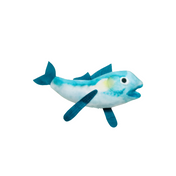
- Minnows and lamb lung for strategic bribery
- And always, Puddy Pops (like 5-6 a day!)
The Moment Everything Changed
Sadly, about 5 weeks into fostering Lil Paulie, my heart dog, Pickles, had a stroke. My partner grabbed the fastest train home from his work trip, but Pickles passed at 2 a.m. on March 4, 2026, exactly one year after her best friend Bubby passed.

When I left for the emergency vet, I didn't even know where Lil Paulie was hiding. I came back, hours later in shambles, clinging to Pickles blanket, crashing on the floor next to the bed.
Lil Paulie poked her head out, curious. I asked my partner to grab some tubie treats. As she ate, I felt something changed and reached out to touch her neck. There was no flinch or hiss. She leaned into my hand and let me pet her for the first time, on her terms.
Behind snot and tears, my partner got his phone out and recorded our moment. Did she know what happened? Could she smell the medicine that took Pickles away from me? Or did she just know that dinner was late?
Four months of patience, and the first pet she ever accepted from me happened on the worst day of my year.

What People Think Fostering Requires vs. What Is Actually Required
People often assume fostering requires a huge house, endless free time, or extensive animal experience. Those things are nice to have, but what foster animals really need is a safe space of their own. A bathroom, a spare room, even a large dog crate.
They just need consistency, patience, and a few dedicated minutes throughout the day. And occasionally, bribery in the form of tubie treats. Even that is more than what they get at the shelter.
A Single Month of Awareness
Every June, rescues ask people to think about fostering. The truth is, they need foster homes every month of the year. Kittens don’t wait for awareness campaigns. Emergencies don’t happen on a schedule. Shelters simply run out of space, and when they do, difficult decisions follow.
In my dreams for the future, there isn’t a need for an awareness month dedicated to fostering. It’s something ingrained in every mind. The world faces countless challenges, but animals often get forgotten.

PuppyKittyNYC is legendary in Queens for taking in cats that many organizations consider “too sick” or “too feral.” Lil Paulie came from another organization already spayed,ear-tipped, and set to return outside, where who knows if she would’ve survived the coldest, snowiest winter NYC had seen in 11 years. PuppyKittyNYC rescued her, we fostered her, and she saved me.
What Didn’t Change
I still went to work. I still went to the movies. I traveled for work and my husband cared for Lil Paulie while I was away. Life continued, my dog died, we survived. And Lil Paulie continued becoming the cat she was always meant to be.
The kitten who once screamed when I changed her litter now screams because breakfast is 17 seconds late.
Lil Paulie found her forever home, 3 days before I wrote this blog. But, there are many more like her, even more that aren’t like her, who need just some space, some time and love, at their pace.